Monday, July 20, 2015

Tickets on Sale Now for The Tree Play


Premiering August 6

The Tree Play

An agitprop folk tale for the theatre 
by Austin writer/director Robi Polgar

that explores the relationship between man and nature and 
poses questions about survival, environmental activism and 
what it means to fall in love.

August 6 – August 8
Preview August 5
Ground Floor Theatre
979 Springdale Road, Austin TX 78702


Inspired by real events, The Tree Play tells the story of a young girl who befriends a tree in the Amazon rainforest. Their unique bond leads the girl on a life-long quest to protect the world’s forests, while awakening a new consciousness in the tree.

Choreography: Toni Bravo
Scene Design: Ia Enstera
Costumes: Buffy Manners
Lights: Jennifer Rogers
Sound and Projections: Lowell Bartholomee
Ensemble: 
April Perez Moore, CrystalBird Caviel, Susan Peterson, Blake Robbins, Kevin Gates, Jonathan Salazar, Huck Huckaby, Nathan Porteshawver, Toni Baum, Corinne Franks Oh and John Grewell
Written & Directed by Robi Polgar

Thursday, Friday, Saturday: August 6 – August 8
Preview August 5
Ground Floor Theatre 979 Springdale Road Austin, TX 78702

Tickets
$5 – $20 (discounts for students, seniors, under-18)
Preview Wednesday, Aug. 5, 7:30pm
Opening night: Thursday, Aug. 6, 7:30pm*
Friday, Aug. 7, 7:30pm and 9:00pm
Saturday, Aug. 8, 4:00pm Family Matinee, 7:30pm and 9:00pm

The Tree Play runs approximately 45 minutes (no intermission).
Please bring a pillow or blanket to sit on. 
Some chairs will be available for patrons who request them.


For more information, please visit our Web page: 

Like/Follow The Tree Play on Facebook:

Follow [attend] our event:

Questions? Email robipolgar @ yahoo.com or phone 512-926-2203

*Patrons are invited to join the company at in.gredients (2610 Manor Road, Austin TX 78722) following Thursday’s performance for an after-party.

Thank you to Hyde Park Theatre for supporting this production. This production has been generously funded by The Creative Fund's Q Rental Subsidy Grant program. The Creative Fund is a funding mechanism that provides much needed support to local performing artists enabling them to further their creative endeavors.


Friday, June 5, 2015

The Tree Play Scores Major Match, Venue Underwriting

The Tree Play wins $3,000 matching grant, $700 venue underwriting, to kick off a month-long fundraising campaign. Building on the generous support of a friend of the project and The Creative Fund's Q Rental Subsidy Grant, June's fundraising campaign follows a successful earlier effort to generate seed money to support the play's August premiere.

Austin, TX June 5, 2015

The producer and creative team of The Tree Play are delighted to announce the awards of two generous grants to support the world-premiere play about the rainforest, the people who live in it and those who risk their lives to protect it. 

A Challenge to Raise $6,000 for The Tree Play

Long-time family friends of the playwright have offered to match all June contributions up to $3,000 -- every dollar raised will be matched one-to-one. A successful campaign will raise $6,000, a hefty amount for an independent theatrical project. This is in addition to a generous personal contribution made to the project by those same friends, separate from the match.

>> People interested in helping support The Tree Play can make their tax-deductible contributions via the project's website

The Q Fund Awards The Tree Play $700 Q Rental Subsidy Grant

In addition, The Creative Fund has awarded The Tree Play $700 to help offset the costs of venue rental at the Ground Floor Theatre. The Creative Fund’s Q Rental Subsidy Grant program puts money back into the Austin performing arts community. “Q” is a catchy name inspired by performers taking their cue and reminding Austinites it’s their cue to support local arts. The Creative Fund is a membership-driven organization; those who'd like to learn more about joining should click here.

About The Tree Play

The Tree Play is an agitprop folk tale for the theatre, provoked by the deforestation of the Amazon. Written and directed by Robi Polgar, The Tree Play tells the story of a girl who befriends a tree. Their unique bond leads the girl on a life-long quest to protect the rainforest, despite the ultimate personal cost.


The Tree Play runs Thursday, Friday, Saturday, August 6 - 8, 2015 (Five performances only: two performances on Friday and Saturday at 7:30pm and 9:00pm) at the Ground Floor Theatre, 979 Springdale Rd, Austin, TX 78702

Tickets for The Tree Play are $5 - $25 and will be available at the Ground Floor Theatre Box Office starting July 1.

Note: Recommended for ages 12 and older.

For more information, please contact:
Robi Polgar, Writer/Director
512  771  0051
http://www.robipolgar.com/tree-play/about.html


The Tree Play is being produced with the generous assistance of Hyde Park Theatre.

The Tree Play has been generously funded by The Creative Fund's Q Rental Subsidy Grant program. The Creative Fund is a funding mechanism that provides much needed support to local performing artists enabling them to further their creative endeavors.


Monday, May 18, 2015

Director Doodles, Squiggles and Sketches* for The Tree Play

*You can see a more coherent (read, "artistic") sketch in the header of this blog. It's by +IA ENSTERÄ, scene designer extraordinaire. We met to discuss the play and, as is her wont, she noodled with pen and paper as we explored how to create a rainforest inside a theatre. The artwork above is what she drew. 

Here's a peek inside the mind of a director (enter if you dare) as I figure out how to take The Tree Play from page to stage. Below are some of the -- let's be generous -- sketches I've -- let's be realistic -- scrawled as part of my thinking out loud with pencil and paper. I've included descriptions so you'll understand what I'm trying to convey in my crude drawings.

SPOILER ALERT!!! If you want to see the play with completely fresh eyes -- unadulterated by my explanations below -- skip the bits preceded by "Spoiler Alert!!!," or just stop reading right here (do please, however, consider making a donation to help support the play -- thanks!).


This is the first drawing (above) that I did back in June, 2011. You'll find this squiggle in the initial draft of The Tree Play, a hastily scribbled half-dozen pages of notebook paper that I'll share in a later post.

Two things stand out in the drawing. First, my cliched concept of the tree and how actors might portray it (in the play three actors work together to create the title character, the Tree). There they are with their arms outstretched -- look, look! They have branches. Ugh. How literal! Well, it's still early in the process and I gotta start somewhere!

The single figure downstage left of the Tree is the character of the Girl, pretending to be a tree. That's the other thing: At first I imagined this play would be produced in a proscenium theatre. Hence, "downstage." The wavy lines upstage are some sort of rainforest backdrop. That soon gave way to the ideas in the sketch below.


I quickly determined two things once I'd written the play. First, the actors portraying the Tree don't stand with their arms outstretched, pretending they have branches. They are, as I noted at the time, "solid" in their stance, more tree trunk than canopy. No more cliched "arm-branches." 

And now we're looking at a performance shape that is ovular -- an irregular oval in which the play happens, surrounded by the audience. The little circles (some are numbered) indicate places where other actor-trees might be, to form a forest through which we watch the play. I'm starting to think about ways to immerse the audience into the world of the play.


That idea of watching the play from among the trees is what the drawing above tries to capture. Inside the oval are the large Tree and the SPOILER ALERT!!! New Tree. Between them hangs the hammock the Father lies on as the lights go down at the end. 

The little matchstick figures around the perimeter are the audience, standing and watching. Yes, I seriously considered making the audience stand for the duration. Anyone who's ever worked worked with me knows I'd risk major audience discomfort if it served the concept! 

What drew me to this particular configuration -- and torturing the audience for a 45-minute play -- is indicated by the larger figures in the background. I was mulling over the idea that we'd aim the lighting from the ground up -- through the spectators, using the bodies of the audience to cast huge, tree-like shadows on the walls around the space. We'd add another layer of forest, created by the people coming to see the play. This would reinforce the idea that "We Are The Trees," the central concept for this production. 

Fortunately for you, assuming you're coming to the performances that is (have I mentioned the play runs August 6 - 8 at the Ground Floor Theatre?), I came up with a better, less audience-torturing idea. I know, I know -- I've grown soft in my dotage.


That said, I didn't completely ditch the up-lights idea. The drawing above is of the Girl, aloft in the Tree, lit from below -- you can see the nose of a lighting instrument poking out of the left side of the page and the three-line beam of light casting deep shadows on the Girl. Lighting the Girl when she's sitting in the Tree from below heightens (no pun intended) the dramatic effect of the moment. I think the squiggle at the bottom of the drawing is SPOILER ALERT!!! the Journalist after he's been murdered. 


I love showing people the drawing above because their first reaction is usually: "?" At first it just looks like a confusion of lines and circular shapes. Yes, yes, all my drawings demonstrate that aesthetic. Then they see: It's me beginning coming to terms with how characters enter and exit the playing area -- where they start and where they wind up. The biggish, dark circular thing up-center left is the Tree (it looks like a potato, or a softball, with little toothpicks sticking out of it). And you can see the Girl's position below and slightly to the right of center (she's the little circular blob with a left-heading arrow passing just above). Where characters enter and exit says a great deal about who they are, where they came from and what sort of change is in store for them.


This drawing takes the entrances-and-exits sketch above a little further. When I saw the Ground Floor Theatre -- the venue for the production -- for the first time it was still under construction. It was painted black and there were no seating risers in the room. It was just a huge empty shell of a space and it was perfect. This drawing attempts to put the play into that big empty space. The Tree is clearly marked in the center of the oval, and there's a sense of how the audience is seated around the playing area (noted by percentages: how many people are sitting in which areas). "Tx" marks where other characters stand; they play SPOILER ALERT!!! a chorus of forest, communicating as echoes of the Tree through movement and sound. You'll see that the chorus surrounds the audience -- we've put the patrons in among the trees, deep inside the forest.


The drawing above is me trying to figure out how the Girl climbs the Tree. First I thought: ladders. But that didn't last long. Next I thought: a knotted rope like you find in PE gymnasiums that looks vine-like and is attached to the ceiling. That's what's going on in this sketch. We are not doing this either. Or not exactly. 

Note the date: 10/28/14: The production designs are well underway -- in my head anyway -- despite the fact that I didn't have a design team until early February. The sketch was made little over a year following the reading we did at Casa Polgar in September 2013, a mere three years after I wrote the first draft of the play (cough, cough; yes this production is a long time coming).


Along with the knotted rope idea came a possible solution for SPOILER ALERT!!! how to hang the hammock at play's end so the Father could lie down in it. The Tree stands on the left, the New Tree on the right and the hammock attaches to knotted rope vines at either end. 

We're not doing that either. Just another example of me working through possible solutions. I think we hit on a good one -- you'll see...


This last image is from a meeting with choreographer Toni Bravo last Friday (May 15, if you're keeping score at home). You'll recognize the oval playing area with the Tree inside, left of center (noted by the three little triangles and the arrowed lines spiraling around them). And now there's a spot the Girl keeps coming back to (the circle with the "A" in it).

As Toni and I talked SPOILER ALERT!!! I added some of the traffic patterns we want the performers to follow (the arrowed lines). Look carefully and you might see some of the actors' names among our perimeter forest chorus.

How much of this will wind up in the final version? Probably a lot, considering these ideas have been cooking for a long time and the creative team likes the direction the play is taking.

Still, I suspect we'll continue to make discoveries as we rehearse. Discoveries that affect the ensemble's movement and gestures and patterns, which will demand new attempts to figure things out with pencil and paper in rudimentary squiggles and doodles.

Let's be generous and call them sketches.

Learn more about The Tree Play or like/follow The Tree Play on Facebook.

Wednesday, May 6, 2015

The Tree Play Explores Love, Conservation, Survival in the Amazon Rainforest

In writer/director Robi Polgar’s new play, a young girl befriends a tree in the Amazon rainforest. They forge a unique bond that leads the girl on a life-long quest to protect the rainforest, while awakening a new consciousness in the tree. The play’s environmental staging and exploration of movement bring audiences up close to the action. 

Austin, TX May 6, 2015 A short description can be found at the end of this post.

Premiering this August at the Ground Floor Theatre, The Tree Play is an original work for theatre by writer/director Robi Polgar that explores the relationship between man and nature and poses questions about survival, environmental activism and what it means to fall in love.


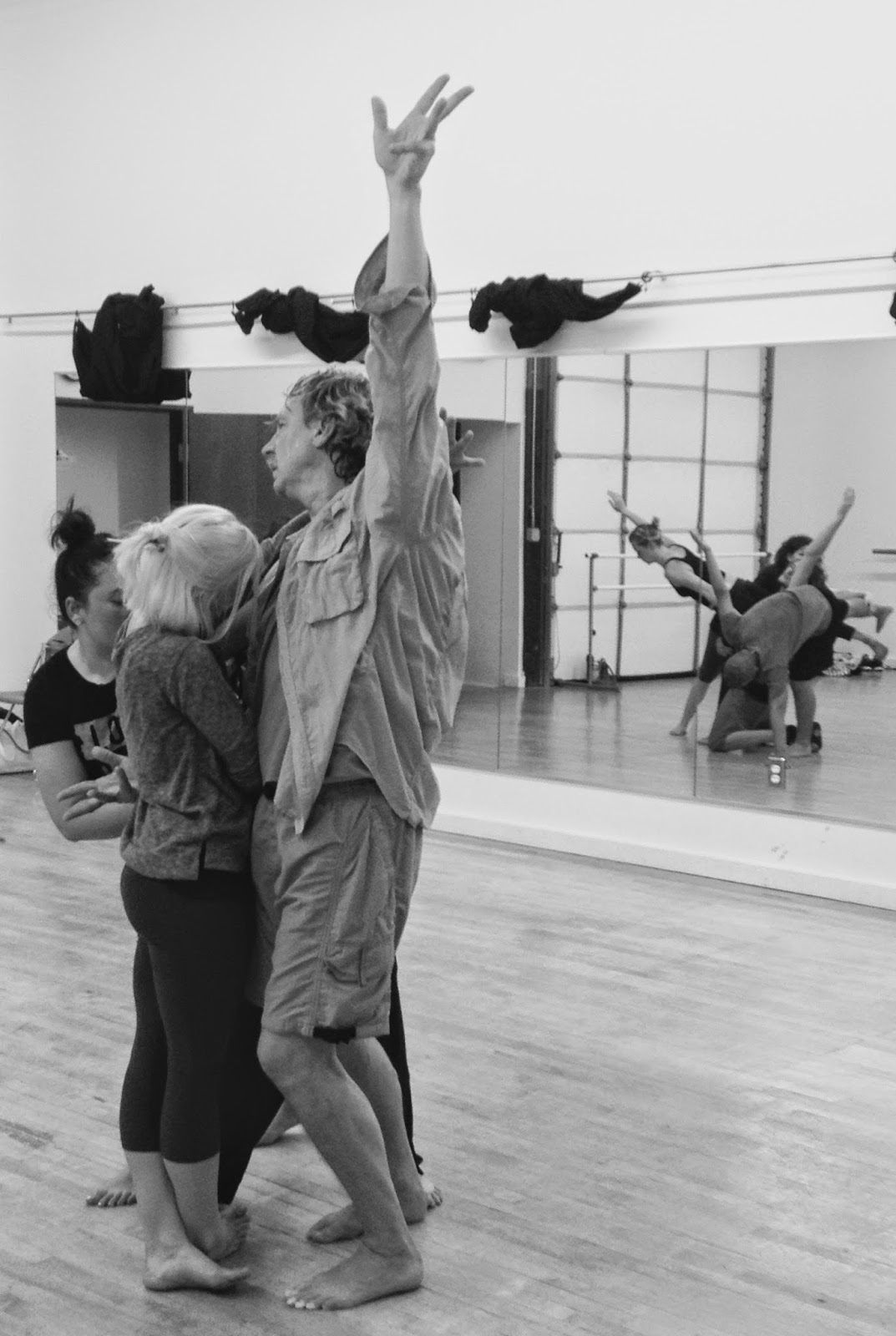
The Tree Play Workshop, 5/3/15.
More images can be found here.
The Tree Play tells the story of a girl who grows up in the Amazon rainforest and befriends a tree. Years later she returns to the forest as an environmental activist. When a logger threatens to cut down the tree she rises to its defense. The girl and the logger struggle and, as they do, something magical happens.

The play’s designs call for the Ground Floor Theatre to transform into the rainforest, where audiences get to experience the story up close in an immersive setting. Playgoers are encouraged to leave this uplifting new play with a renewed sense of mission -- to become better stewards of the Earth.

A Sensory Approach to Making Theatre
The play combines performance styles to complement traditional scenes that together tell the story of the girl, the tree and the people who influence the life of the rainforest. Actors use their bodies and voices to create the environment through a range of movement, dance, choral voices and sounds.

“I want to evoke a living, breathing forest, in which the audience is arrayed as if sitting under great trees in a far-away jungle, immersed in the environment and pressed close to the action,” says writer/director Polgar. “I’m especially excited to explore how the actors can expand the sense that we are in the forest through movement, sound and rhythm.”

One Girl and One Tree: A Microcosm of the Threat to Our Rainforests
Rainforests around the world are threatened by accelerated deforestation. According the World Wildlife Fund, approximately 17% of the Amazon rainforest has been lost in the last 50 years. The continued deforestation of rainforests around the world is having a catastrophic effect on life on earth, because these forests help mitigate climate change.

Additionally, environmentalists and others who are fighting to save the rainforest
have been targets for assassination, silenced to allow the wholesale destruction of the forest to continue.

The Tree Play uses the story of one girl and one tree to make the point that the stakes are high in the struggle to preserve the vital forests of the Earth.

“I felt compelled to write this play after reading accounts of environmentalists murdered for trying to protect the Amazon rainforest,” says Polgar. “It’s important to me that, despite the serious message of the play, audiences come to the theatre and have a lot of fun, get to experience the unexpected and wind up deeply moved. Hopefully they’ll be inspired to think a little harder about how they can help to protect their environment.”

>>Learn more about The Tree Play

Polgar Returns to Directing after 10-Year Absence
Robi Polgar is a writer, director and musician who lives in Austin, Texas. The Tree Play marks Polgar’s return to the Austin stage after a 10-year break. Prior to taking time away from the theatre, Polgar was perpetually active as a writer, director and producer, first as a co-founder and Artistic Director of The Public Domain Theatre Company on Congress Avenue in downtown Austin, and then as an independent artist. His work has been recognized by the Austin Critics’ Table and has won numerous B. Iden Payne Awards.

Short Description
What: The Tree Play is an agitprop folk tale for the theatre, provoked by the deforestation of the Amazon. Written and directed by Robi Polgar, The Tree Play tells the story of a girl who befriends a tree. Their unique bond leads the girl on a life-long quest to protect the rainforest, despite the ultimate personal cost.
When: Thursday, Friday, Saturday, August 6 - 8, 2015 (Five performances only: two performances on Friday and Saturday at 7:30pm and 9:00pm)
Where: Ground Floor Theatre, 979 Springdale Rd, Austin, TX 78702
Tickets for The Tree Play are $5 - $25 and will be available at the Ground Floor Theatre Box Office starting July 1.
Note: Recommended for ages 12 and older.

The Tree Play is being produced with the generous assistance of Hyde Park Theatre.

For more information, please contact:
Robi Polgar, Writer/Director
512  771  0051
http://www.robipolgar.com/tree-play/about.html


Wednesday, October 15, 2014

Source Material for The Tree Play

When I read this New Yorker piece by John Lee Anderson about changes to Brazil’s “Forest Code” I was dumbstruck by the overt, unpunished violence against people who were fighting to save the rainforest. I read on, compelled by the horrific account of state-sanctioned assassination, for what else could it be if everyone knows it’s going on yet no one in power raises a finger to do anything about it? 

This description in particular spurred me to do more research into the people who were (are) giving their lives to protect the magnificent Amazon rainforest:
With development fever spreading in Brazil, it seems to be open season not only on the Amazon’s forests but also on those people who try to protect them. On May 24th, the day the bill was being debated, news broke that a pair of assassins on a motorbike had ambushed Jose Claudio Ribeiro da Silva, an environmental activist, and his wife, Maria, and killed them. In the trademark style of contracted executions, the killers gave Ze Claudio, as he was known, and his wife coup de grace bullets to their heads and then removed an ear from each of them. Ze Claudio was a charismatic and outspoken opponent of land-grabbing ranchers and charcoal burners; last November, in a speech he made at a TEDx conference held in Manaus, he spoke of receiving death threats. When a legislator announced the news of the murders in Congress and called for an investigation, a round of booing erupted from the agribusiness-backed “ruralistas.” 
Three days later, in Rondonia, another front-line Amazonian state, Adelino Ramos, another prominent environmental activist, was shot dead in front of his wife and children. The next day, a few miles from where Ze Claudio and his wife were murdered, a young man named Eremilton Pereira dos Santos was gunned down, execution-style. His relatives said that he may have witnessed Ze Claudio’s killing. On June 9th, in the latest such incident, another peasant activist was murdered in Pará.
Below is a collection of my initial research into the assassinations of environmentalists, conservationists, local politicians, clergy and common folk, whose transgression against massive corporate greed led to their deaths. Also there's a cursory examination of deforestation, images of the rainforest under attack and, last (of course), some official efforts to combat the forces hell bent on destroying the forest for profit.

As I discover more source material, I will post it here. 

Or feel free to post links, descriptions, personal experiences in the comments below.


Murder in the Amazon
Jon Lee Anderson’s piece in the New Yorker (the inspiration for The Tree Play).
June 15, 2011.

Assassinated for Trying to Protect the Forest
“… more than 1,000 … have been murdered in the last 20 years …” ~Guardian story on retrial of murderers of Sister Dorothy Strang, 4/8/2009:


More than 1,100 activists, small farmers, judges, priests and other rural workers have been killed in land disputes in the last two decades, according to the Catholic Land Pastoral, a Brazilian watchdog group.


Of those killings, fewer than 100 cases have gone to court. About 80 convicted suspects were hired gunmen for powerful ranchers and loggers seeking to expand their lands, according to federal prosecutors and the watchdog.


About 15 of the men who hired them were found guilty but none of them are serving a sentence today.


Wilson Pinheiro (union leader)
Assassinated July 21, 1980.


Vicente Canas (a Spanish Christian missionary and Jesuit brother)
Assassinated April 6, 1987.


Chico Mendes
Assassinated December 22, 1988.


Sister Dorothy Stang
Assassinated February 12, 2005.


José Cláudio Ribeiro da Silva and his wife, Maria do Espírito Santo'
Assassinated ~Tuesday 24 May 2011.


Adelino Ramos (president of the Amazon small farmers association)
Assassinated May 27, 2011.


Eremilton Pereira dos Santos (probable witness to shooting of da Silva and his wife)
Murdered ~May 31, 2011.
More on the Deforestation of the Rainforest


World Wildlife Fund on deforestation (global):
WWF Amazon background page:
Image of burning forest on the blog “Everything Beautiful”

Blog post on “Everything Beautiful”: Save the Amazon

Search “rainforest deforestation” (images results)

Wednesday, September 18, 2013

Discussion Following the Reading of The Tree Play 9/8/13

 Sophia and Robin Grace 
Nine readers and a handful of production staff (and some kids and cats) met at Casa Polgar on Sunday, September 8 for an intimate, private reading of The Tree Play. After the reading there was wine and food and a 20-minute open discussion in response to what we’d heard and read. Below are my notes of the things that caught the group’s attention and ideas and questions prompted by the play. 

Click here to see more photos from the reading.

rp


What sort of play is The Tree Play?
Skip the play -- one participant wanted to turn it into a movie right away: Let's get the lighting guys in!”

One said it felt like a nursery rhyme.

Another said she thought it was a children's play. Until the boy put his hand down the girl's shirt.

That this felt like a children's play resonated with many of the actors. So did the idea that it felt like a nursery rhyme or even a fairy tale. (“I have the sense that this would work very well for a young audience.”)

Breathing and how breathing and the staging interrelate.
The play opens with the sounds of breathing. Deep breathing with an intentional sound, like Ujjayi breathing in yoga practice. In the reading the three actors who comprise the TREE made this breathing sound. This is an aspect of the performance everyone wanted to explore and play with.

“Perhaps the audience enters the space and the actors are already in their spots, all breathing. And maybe there are performers behind the audience, also breathing this way, to create a surround-sound sensation of the inhalation and exhalation of breath.”

“I wonder what it would be like to have many breaths as the play begins. Whether consciously or not, the spectators could begin to mimic, sync up with the rhythm of the breathing of the performers. If the staging is environmental, and the audience is part of that environment then we could all be breathing together right from the top.”

“And the audience is immediately more involved: ‘I'm a part of this; my part in this is so much bigger.’”

“‘I’m more than spectating.’”

“The audience becomes part of the forest too.”

“It would add to the tension if the breathing is simultaneous at the start and when things get tense the breathing alters among the performers playing the TREE. Perhaps one element of the TREE character is breathing really fast while another is breathing really slowly. Let it build with situation.” 

Photographs or video or animation. 
“The play reminds me of animation movies. You hear the narration and the animation grows into the character. Like a drawing in process. Maybe instead of having trees or shapes that look like trees, maybe there’s a projection of a tree on this side and one on this side and over the course of the play the whole system is surrounded by trees.”

“There could be a pre-show video as a way to enter into this world. A video presentation of trees swaying from different perspectives.”

“Is there a way to video the people in the performance room from strange angles to create towering figures and project those on the walls surrounding the audience? Shapes that aren’t trees, specifically, but that evoke the sense of massive towering figures all around.” 

Music and sounds.
“If there’s music/musicians, they should be heard but not seen. The music surrounds the audience, too, while the audience’s focus in looking inside the performance circle/space. The audience has no idea where the music is coming from it’s just part of the environment.”

“I’m a sucker for live foley stuff to create as much of the cacophony of the forest as possible. It’s not drums, it’s musical instruments and noise makers. Instead of ‘monkey chatter’ it's [whirring, grinding noise]. I don’t want recorded sound. Make the performers learn to play instruments if necessary!”

Live sound keeps that organic feel. If we’re going to have one element on which to build then we're going to have to stay in that world [where the performers (and audience) create the entirety of the world of the play without recordings]. 

Musing on the number 3.
“The TREE as three entities is interesting. 3 is such a prominent number in religion, Catholicism. The TREE is GIRL’s religion, perhaps?”

“The original cross was not a cross it was a tree.”

“And three men come in and out of the GIRL’s life in the span of the story.”

“There are practical reasons for a trio of performers as the TREE. It gives us options to split focus to different parts of the house.”

“Three allows for 360-degree presence/awareness of the TREE.” 

Random thoughts and observations.
“Beer can being thrown. It’s a simple image that means so much. Small gestures and images mean so much in a play like this.”
 

“During the show, do [we get the sense] of trees being knocked down? Is the audience made aware of the destruction? Do we use lighting in other ways to indicate the shifts in the forest, the loss of trees?”

“Is there an awareness that the process of deforestation has begun right from the start; FATHER notes that there are already trees cut down -- foreshadowing, the ‘end of the play at the beginning.’”

“The TREE is both timeless and always innocent; because there’s always something new happening as the TREE grows.”

“Timelessness: Things are old and new at the same time.”

“Not all fires in the rainforest are bad.” It’s important for the life of the forest that old, overgrown sections burn to allow for new growth.

Similarly, logging is also necessary for the health of the forest (the LOGGER is not a bad character or one to be feared; he’s just doing his job). 

Idea for workshops. 
Movement: Animal movement from cues in the play to convey mood, tension and aid the performers. Create a shorthand for moments in the play: “This is a monkey moment.” “This is snake.” Ways to help actors move during performance. A vocabulary of ways to move.

Read an excerpt from The Tree Play.